2012年9月21日 星期五

Earth as Art

想像你漂浮在太空中俯看地球,那絕對是非常美麗。
但如果透過衛星鏡頭,綴以機器失準的色彩,效果會出乎你意料之外的驚人。
美國地質調查局(United States Geological Survey,USGS)精挑細選後,發表一系列由地球觀測衛星Landsat 5 與 Landsat7所拍攝的影像;這兩台太空機械為地球科學家提供豐碩的研究數據,然而這些影像更是依據美學而擇優。
我們從USGS的Earth as Art系列中精心挑選,將帶你從南極的冰川到阿爾及利亞的沙漠,進行一趟視覺震撼之旅。
伊朗,大鹽漠(Great Salt Desert)
看起來像是畫布上狂放流洩的顏料,展現某種獨樹一格的蒙太奇拼貼。這是依朗最大的沙漠──卡維爾鹽漠(Dasht-e Kavir)或稱大鹽漠(Great Salt Desert)。「Kavir」是波斯語中「鹽沼」之意。這塊杳無人煙的廣漠覆蓋面積約7萬7000平方公尺,多樣的地形包括了乾河床、沙漠高原、潮間帶及鹽沼,無比高溫、變化極端的日夜溫差及狂暴的風沙,則是這不毛之地的常態。

加拿大,貝爾徹群島(Belcher Islands)
由粉紅色和綠色的筆刷輕掃出的貝爾徹群島,被深藍色的加拿大哈得遜灣(Hudson Bay)盤區環繞。島上唯一的住民居住在Sanikiluaq的小鎮,位在群島北端中央。儘管影像中有著些許綠色調,但這些岩石島嶼冷到除了少許的矮生植物外,沒有多餘植被。

美國,密西西比河(Mississippi River)
城市、農田與牧場的小小方格狀散布,被密西西比河的漩渦與螺渦溫柔環抱。田納西州孟菲斯市南邊的蜿蜒河道,伴著數不盡的牛軛湖與曲流,是阿肯色州和密西西比州的界河,同時也是北美最大的河系。
瑞典,哥德蘭島(Gotland)
黑暗的海面,綠色浮游植物群集而成的漩渦,繪出梵谷名作《星夜 》,圍繞著瑞典位於波羅的海的哥德蘭島。浮游植物是位於食物鏈最下層的微小海生植物,當洋流將養分帶往陽光照射的海面時,充足的能量促使生長與繁殖,就會造成群體數量大爆炸,產生我們看到的這樣壯觀景象。
冰島,埃亞峽灣(Eyjafjorour Fjord)
冰島向外延伸的北岸,看上去像顆老虎的頭,有著清楚的橘色、白色和黑色條紋。虎嘴部份是深入本島和陡峭山脈的埃亞峽灣──「島嶼峽灣」之意,這名字源於虎嘴中有個小小的、淚珠狀小島:Hrísey島。擁有不凍港的城市阿克雷里(Akureyri)就位在峽灣底端,她是冰島第二大城,人口數僅次於首都雷克雅維克。

阿爾及利亞,伊基迪沙漠(Erg Iguidi)
看起來像一道道淺黃色顏料,劃過雜色鑲嵌畫上,這是風吹沙造成的沙脊,也造就了伊基迪沙漠,一個由阿爾及利亞延伸至西北非茅利塔尼亞(Mauritania),型態不斷變動的沙丘,伊基迪沙漠是眾多撒哈拉沙漠之一,那兒超乎尋常的沙丘不論長或高,通常都會遠超過五百平公尺以上。

南極洲,勃德冰河(Byrd Glacier)
這是貨真價實的「冰河」,流經橫貫南極山脈,也是南極流速最快的勃德冰河,每年流速達0.8公里。冰河注入南極高原(圖左)及羅斯冰架(圖右),一年超過180公里長。在綿延的線上有些短促的線,稱作冰隙,是極深的冰塊裂縫。圖中的紅色斑塊則是外露的岩石。

阿拉斯加,育空三角洲(Yukon Delta)
發源於加拿大北部卑詩省的育空河,流經阿拉斯加,最後奔向白令海的懷抱。無數的湖泊、沼澤與池塘交錯在育空三角洲上,曲折蜿蜒的河道分支像是包繞著器官的血管。這是世上最大的河流三角洲,目前劃為育空三角洲國家野生生態保護區(Yukon Delta National Wildlife Refuge)的一部分接受保護。

加拿大,洛磯山脈(Rocky Mountains)
光與雲的互相作用,在洛磯山脈上刷出長且厚重的紅色筆觸。圖中錯落的線條是洛磯山谷(Rocky Mountain Trench),從蒙大拿往南向育空延伸的深谷。低矮的雲朵沒入接近加拿大艾伯塔與卑詩省邊界的谷溝,這個令人絕嘆的光影效果,是來自於雲層反射陽光,與當地低入射角的陽光搭配之結果。

澳洲,大堡礁(Great Barrier Reef)
乍看可能會以為是考古採集活動中,挖掘後露出地表的恐龍化石,但其實這是大堡礁露出水面的礁體。大堡礁是全世界最大的熱帶珊瑚礁系,蔓延澳洲昆士蘭的海岸線約二千公里。這個地球上最大的活生生有機體,哺育了複雜且龐大的海洋生態系統。

沙烏地阿拉伯與葉門交界,空曠的四分之一(Empty Quarter)
投下檀黑色陰影的白色針狀雲群集在魯卜哈利沙漠(Rub’ al Khali)上空,這裡又被稱作「空曠的四分之一」,位於沙烏地阿拉伯與葉門的邊界附近。風雕蝕而出的細長沙痕是這類綿密沙質的沙漠或沙海的主要特徵,魯卜哈利沙漠在這類沙漠中的面積最為廣大。隆起的高丘正好中斷這些沙痕,在高丘中央坐落的是沙烏地阿拉伯的城市沙魯拉(Sharurah)。


加拿大,利物浦灣(Liverpool Bay)
骨骸狀的海岸相連如指骨交錯,這裡是加拿大西北邊境的利物浦灣北端。波佛特海(Beaufort Sea)畔,既偏遠又荒涼苔原上只有幾個零星的村落。極短促的夏季中,會有一些零星的湖泊形成在較低的地勢。

波羅的海,奧蘭群島(Aland Islands)
浮冰形成的土耳其藍漩渦,與北波羅的海的深藍,綴襯著位在芬蘭與瑞典間的奧蘭群島(紅色處)。海冰形成的初期,夾雜著細碎冰晶的浮冰,會在海面像油膜般漂浮。風和洋流的不斷吹拂下,便形成了這超現實如鬼魅般的圖樣。
波札那,奧卡萬戈河(Okavango River)
像是沾滿深綠色水彩顏料的筆刷,恣意任其滴流到紙上,南非的奧卡萬戈河在北波札那的蒼白大地上,開展出翠綠的奧卡萬戈三角洲。河水自三角洲注入卡拉哈里沙漠(Kalahari Desert)中的盆地,滋養了阡陌交錯,充滿綠意的潟湖、水道與小島,即使在乾季仍有為數可觀的野生動物。

格陵蘭島海岸
格陵蘭島東南沿岸的縱橫交錯峽灣,構成冰河出海口的漏斗狀河冰,注入大西洋。每逢夏季融冰的時節,新生的冰山會將溶解的冰山推入海中,與海冰匯合,當這股水流南向流往東格陵蘭寒流時,就形成了美不勝收的漩渦。山峰露出的岩石,染上紅色調,也是絕景的一部分。

阿爾及利亞,舍什沙漠(Erg Chech)
透過衛星的「電眼」,沙哈拉沙漠的帶狀沙丘,在餘暉中發著微微紅光。這些沙丘是屬於舍什沙漠的一部分,一個位於阿爾及利亞西南部的廣袤沙海,當地的盛行風不斷改變沙丘的面貌。「erg」源於阿拉伯語的「沙丘田野」之意。
烏干達與肯亞交界,埃爾貢山(Mount Elgon)
雲朵群集在山峰周圍,這是非洲的埃爾貢山,位於烏干達和肯亞邊界的巨大死火山,這座火山的深釜狀火山口,幾乎是世界第一大,直徑約6.5公里。火山口是當岩漿流經火山內部時,頂端的岩石承受不住崩塌所形成。
阿曼,朵法爾區(Dhofar Region)
絕大部分的阿曼都是一望無際的荒漠,除了阿拉伯海岸的朵法爾區,驚人氣候差異為此地帶來不一樣的地貌。季風為沿海地區在夏季帶來的季風雨,又稱作khareef,自蒼翠和貧瘠的分水嶺上當頭澆下,滋潤了沿海及其內陸,為河水、瀑布與湧泉提供充足水份,使低地水源充沛地度過接下來的日子。

俄羅斯,恰翁灣(Chaunskaya Bay)
明快的色彩和詭譎的形狀,營造出奇幻夢想故事的氛圍,這個異國情調的迷宮,呈現位在西伯利亞西北部的俄羅斯恰翁灣(亮藍色處),兩條主要河流;恰翁河(Chaun)與帕利亞瓦姆河(Palyavaam),注入海灣流向北冰洋,冰河消退後,為這個區域帶來滿佈的彩帶狀水體。
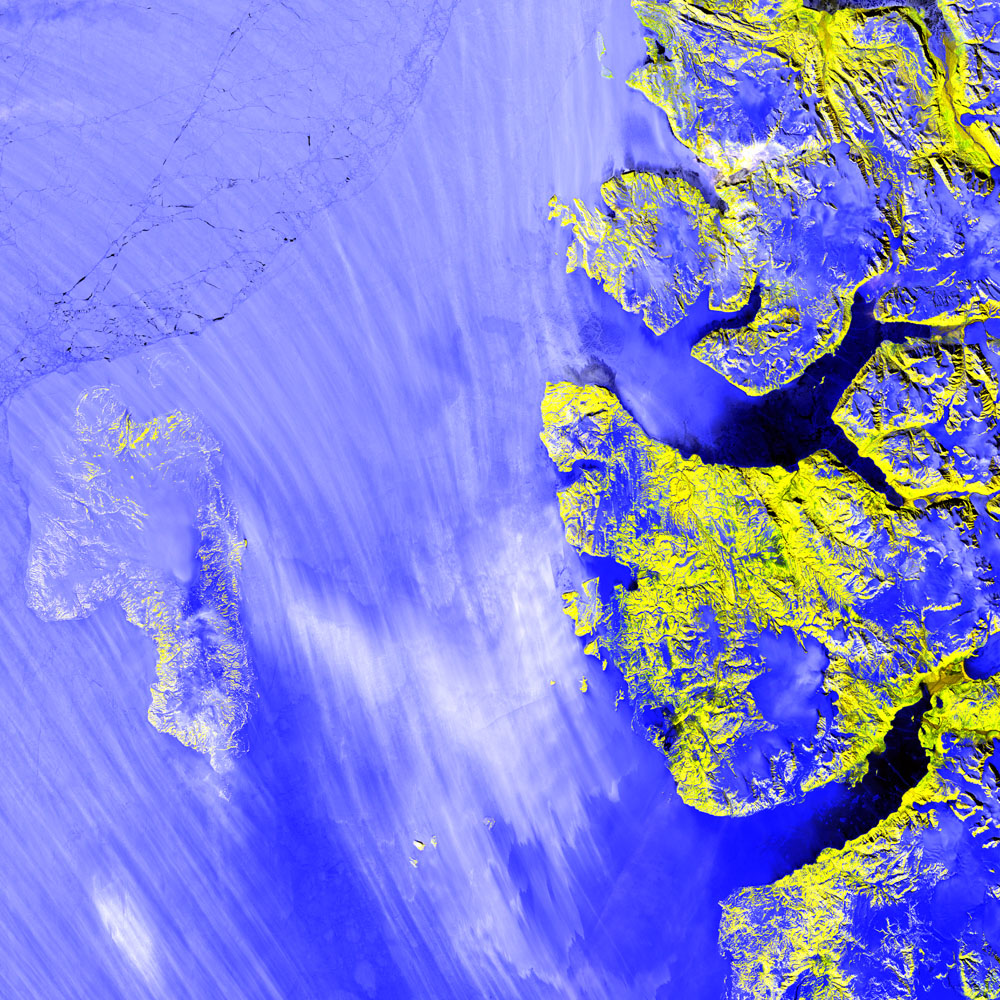
加拿大,梅根島(Meighen Island)
位於加拿大北岸的梅根島(圖左),為風雪蒙上一層白紗,在斯伐德洛海峽(Sverdrup Channel)對面的則是大得多的亞斯海堡島( Axel Heiberg Island),冰河(藍色)自山峰(黃色)緩緩流入峽灣,目前尚無是否有人類居住於此島上的跡象證據。

巴基斯坦,瓦濟里斯坦特丘(Waziristan Hills)
深紫色與綠色加強了瓦濟里斯坦特丘的存在感,一個位在巴基斯坦西北部,接近阿富汗邊境的山區,陡峭崎嶇的地形以及狹窄的峽谷,令人只敢遠觀;順著山勢而下的河流,提供這個少雨地區的農業水源。


土庫曼,達爾扎半島(Dardzha Peninsula)
這個滿口黏液的巨大怪獸,是位在西土庫曼,裏海淺海沿岸的達爾扎半島。強勁的風勢將沙颳到了水邊,形成沙丘,部分沙丘浸在水中,靠內陸的沙丘會慢慢轉為低地沙質平原。


2012年8月27日 星期一

The Pixel Trade


澳洲攝影師Shantanu Starick最近進行了一個極大野心的攝影計劃——就是「以相代錢」來去旅行!他的網站The Pixel Trade就記載了他超棒旅程!他的做法是這樣的:每到訪一個地方,他都會為當地人提供專業的攝影服務,而他並不收取金錢,而是收取食物、住宿和順風車來作為報酬。


Starick的做法不是隨便亂找客人,而是他會叫剛剛光顧完他服務的客人,介紹下一個需要相關攝影服務的人。他說:「我先是幫一對情侶拍攝,無論是什麼類型的相片,由人像、產品、建築、婚禮、時裝等等任何東西我都會拍。」
「我同時會提供修正相片的服務,為了讓我的旅程繼續,我會叫客人在我留宿之際介紹一位需要我服務的新朋友,這樣這個Pixel Trade就可以繼續,我亦同時在不斷旅遊。」
在他這個超棒的網站上面,他記載了每一段「交易」,每段交易都記有交易的時間和季節、客戶資料、一段工作簡介、一首他客戶所推薦的歌曲、他所逗留的時間,以及所拍攝的照片和作品。
Starick本身是建築系學生,他在兩個月前暫停了學業踏上旅途。他已走過了澳洲東西岸,最近他更去了紐西蘭和美國。他的旅程還未終結,不知他會不會有興趣來香港、台灣和中國?有人想請他的話不如試試發個電郵看看?
如果你也像我們一樣對他的大冒險有興趣,就要跟蹤他的Blog了!

2012年8月17日 星期五

5 Tips to Shake Up Your Travel Photography


I love to look at travel photography, but man, sometimes it can all just seem mind-numbingly similar.
Put a cabin, some rocks, grass, or sand in the foreground, a lake or ocean in the middle ground, and a sunset or mountain in the background, preferably during a slightly cloudy day.
Shake. Rinse. Repeat.
I do this frequently; everyone does.  But that’s the problem.  Sometimes we need to break away from the formulas of what we think photographs should look like.  We need to think outside of the box and try to do things a little differently.
So here are a few tips and thoughts to help you create unique travel photos.

1.  Forget the stock photos and focus on daily life.


When we’re in a new place, sometimes all we can think about is taking photos of the beautiful architecture, the monuments, and the wonders that we travelled to see.  We have these thoughts from the countless guide books we’ve read and from the imagery we’ve seen over the web.  We want to take those same pictures to have for ourselves (and we should take these photos.)  But these things are not necessarily what gives a place its essence and its soul.
Stop and think about how you feel.  What is it that is creating that feeling?  Is it that tiny, bustling restaurant, lit up at night and filled with regulars?  Is it the well dressed men in expensive suits and shoes riding their bicycles to work?  Is it the chaos and constant traffic on the streets?  Is it the food vendors on the side of the road?  Is it the fresh bread and cheese?
For instance, what describes Italy better?  Is it your typical capture of the Duomo or the Ponte Vecchio, or is it a detail shot of an older man in a well-made suit walking on wet cobblestones and bringing home fresh bread at the end of the day?


2. Combine the old with new.


We all want to photograph another time period.  I would do anything to photograph the Venice or Florence of a couple hundred years ago.  Unfortunately, we can’t and we need to come to terms with that.  If we are walking around searching for only painterly moments that look like they were taken fifty or a hundred years ago then we will miss out on so many fascinating modern and poignant moments.
Try to seek out moments that combine the old and the new – that pay homage to the past but update it with a modern twist, such as the above shot of the old, ornate Florence door combined with the modern pizza delivery menu – a quirky take on a classic city.


3.  Turn your camera away from the sunset and shoot a “triptych”.

 Sunsets are gorgeous but they can also be cheesy.  If you are like me then you’ve shot hundreds of them and they all sit on your harddrive, all looking basically the same.  Instead, turn your camera around and focus the colorful effects of the sunset on the local architecture or landscape.
Then, take this further by creating a triptych.  Over the course of a couple hours, the light from a sunset will constantly change colors, from orange, to purple, to blue.  Set up a tripod, grab a good book, and take identical shots of your surroundings with different color pallets.  Then, frame them side by side on your living room wall.  They will look stunning.

4. Combine a simple detail shot with a great story.


In 2005, I crashed a moped on the swirling roads outside of Siena.  My left arm and my Canon EF 24-70mm F2.8L lens still hold the scars to show for it (both are fine).  You know you’re a photographer when you crash a vehicle and the first thing you do is check to make sure your camera equipment is okay.

Arriving in Montalcino a couple days later and deathly afraid of mopeds, I intelligently decided that it would be a fun idea to rent a crappy bicycle and ride it down one of the tallest hills in all of Tuscany with a tripod and a huge bag of my heavy (and most of it unneeded) equipment.
The ride down was fantastically fun, speeding without ever having to pedal and stopping frequently to photograph the freakish grapes and old wineries.  After a significant amount of time going downhill, however, I suddenly realized that I would eventually have to return the way I came.  By this point I was too far invested and so I kept going downwards and photographed in the surrounding area for the rest of the day.
I returned to the gigantic hill exhausted at the end of the day, 6 kilometers from the top, but psyched myself up to make it up the hill.  I balanced myself on the cheap bike with my lenses and tripod on my back and proceeded to pedal hard and fast and sped up the hill confidently.  A minute of this confident pedaling later and my muscles froze.  I stopped, rolled off the bike, and proceeded to gingerly walk up the hill.  The next few hours were a miserable pattern of 5 minutes of walking and 30 seconds of riding.  I finally arrived at the town late in the evening starving, exhausted, and numb but euphorically relieved.
Unfortunately, I would soon realize that all of the restaurants had closed for the night and food was nowhere to be found.


5. Capture the Locals.

Ultimately, it is the locals that give most destinations their true feeling, so go out and capture them!  Hang around in a busy area for an hour and do some people watching.  Capture the locals candidly as they go about their everyday lives.  Mix these shots with your shots of the local architecture, the details of daily life, the monuments and of your personal stories and you will have a more complete document of the destination when you return.

The point of this list of tips was not to say that you shouldn’t take the typical travel photos.  That’s just not true.  But you should also try to push yourself outside of the norm whenever possible.  Try to create the type of photos that stand out and are unique.


Read more: http://digital-photography-school.com/5-tips-to-shake-up-your-travel-photography-ready#ixzz23oh95q8e
檳榔 Betel Nut
檳榔西施 Betel Nut Beauty

whimsical